How Do I Know My Data Cabling Installer Has Done the Job Properly?
How Do I Know My Data Cabling Installer Has Done the Job Properly?
The Complete Guide to Cabling Testing, Certification and Documentation
When a new data cabling installation is completed, many businesses make the same assumption:
"Everything is connected, so the job must be done properly."
Unfortunately, that is not always the case.
A network cable can look perfectly fine, be plugged in, and appear to work — while still having hidden issues that could affect performance, reliability, and future upgrades.
For IT managers, facilities teams, and business owners, the question should not simply be:
"Does the network work today?"
It should be:
"Has the network been installed correctly and proven to perform?"
A professional cabling installation should include more than cables in the walls. It should include proper testing, certification, documentation, and a complete handover package.
Here is what you should expect from a quality data cabling installer.
Should I Receive Test Certificates After Installation?
The short answer is:
Yes.
A professional cabling installation should always include test results as part of the completion process.
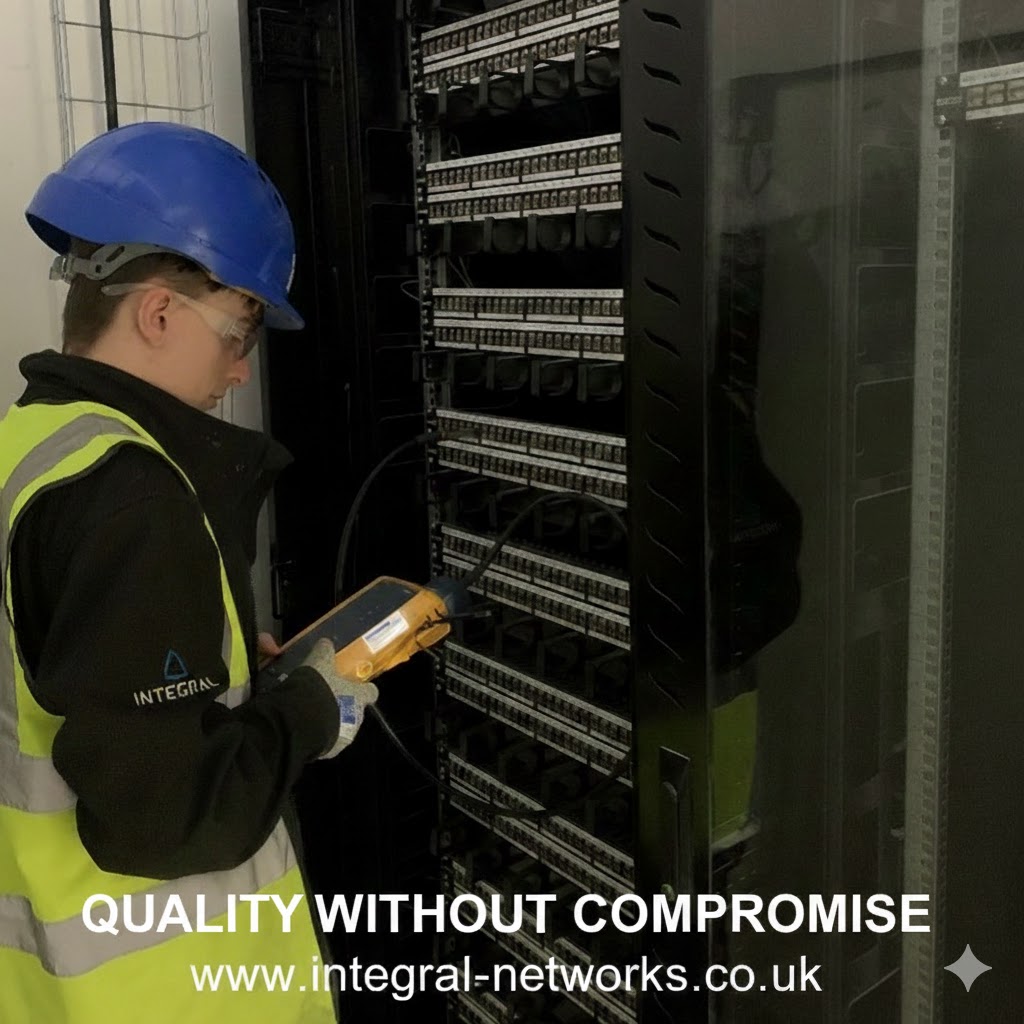
Testing provides evidence that each cable has been installed correctly and meets the required performance standards.
Without test results, you are relying on assumptions.
A professional installer should provide documentation showing:
Which cables were tested
Test results for each cable
Whether cables passed or failed
Performance measurements
Certification details
These records provide confidence that your network infrastructure is ready to support your business.
Is Fluke Testing Really Necessary?
This is one of the most common questions businesses ask.
The answer is:
Absolutely.
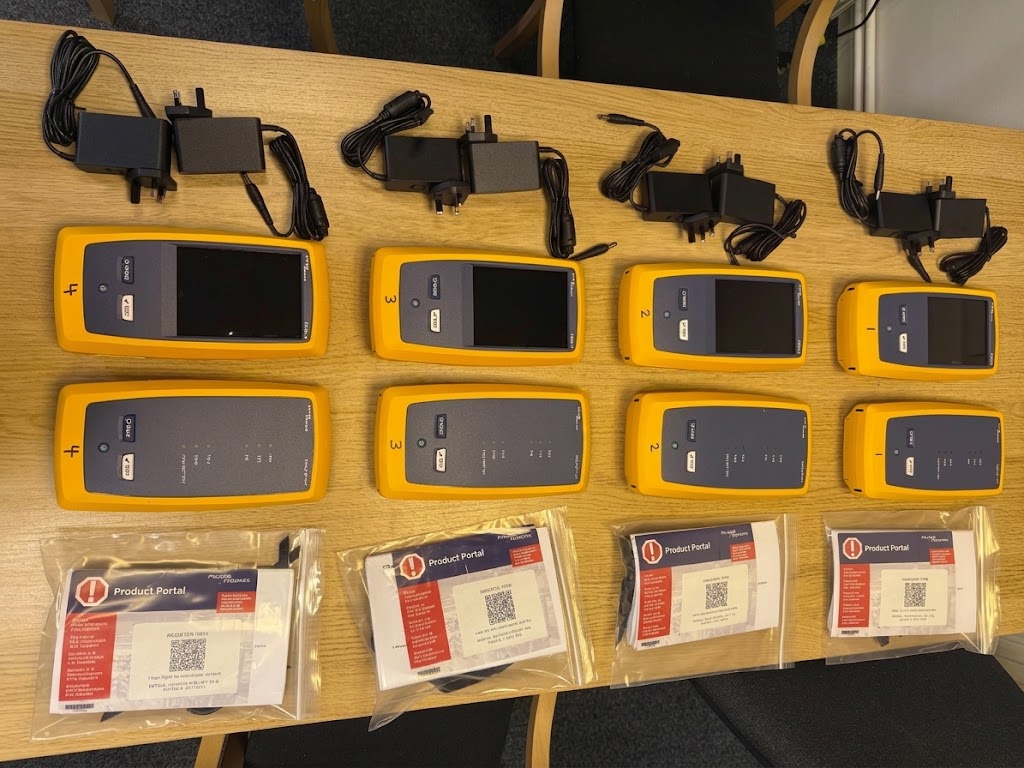
Fluke testing is a recognised method of verifying that a structured cabling installation performs correctly.
A cable may appear to work but still have problems such as:
Incorrect termination
Wiring faults
Poor connections
Performance limitations
Installation damage
These issues may not become obvious immediately, but they can cause:
Slow network speeds
Intermittent faults
Connection problems
Difficulty troubleshooting issues later
Fluke testing identifies these problems before they become expensive business disruptions.
Think of it like buying a new car.
You wouldn't accept delivery without checking it had passed safety inspections. Your network infrastructure deserves the same level of confidence.
What Does Fluke Testing Check?
Depending on the type of installation, professional testing can verify:
Wire Mapping
Confirms that each wire is correctly connected and terminated.
Length Testing
Checks cable distances and confirms they are within acceptable limits.
Signal Performance
Measures whether the cable can support the required network speeds.
Fault Detection
Identifies issues that could affect reliability.
Compliance
Confirms the installation meets the required cabling category and performance requirements.
Testing creates a clear record that the installation has been completed correctly.
What Documentation Should I Expect From My Installer?
A professional cabling installation should come with a complete documentation package.
This should typically include:
Cable Labelling
Every cable and connection should be clearly identified.
This helps your IT team quickly locate and manage connections in the future.
Patch Panel Schedules
These show how cables are connected within your communications cabinets.
As-Built Drawings
These provide an accurate record of the completed installation, showing:
Cable routes
Data point locations
Cabinet locations
Network layouts
Test Results
Proof that the cabling has been tested and passed.
Warranty Information
Details of any manufacturer warranties and installation guarantees.
Good documentation saves valuable time when changes, upgrades, or faults occur.
Why Documentation Matters After Installation
Many businesses only discover the importance of documentation when something goes wrong.
For example:
A network point stops working.
An employee moves desks.
A new department is added.
A switch needs replacing.
Without documentation, engineers may spend hours tracing cables and identifying connections.
With proper documentation, the solution is usually much quicker.
Good records turn your network from a mystery into a manageable system.
What Are the Signs of a Poor Cabling Installation?
There are several warning signs that an installation may not have been completed properly:
❌ No test results provided
❌ Cables are not labelled
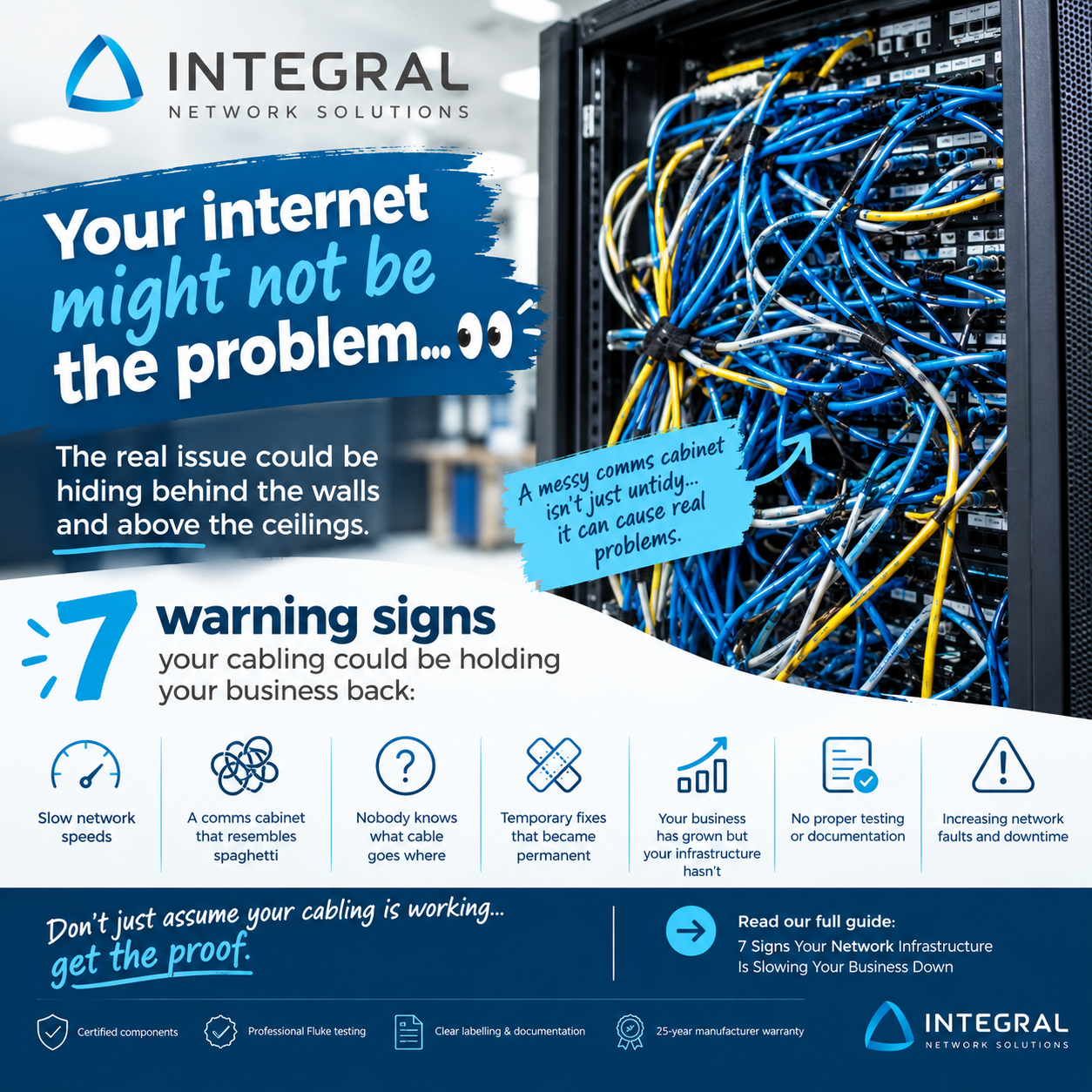
❌ Cabinet is untidy or difficult to understand
❌ Installer cannot explain the standards used
❌ No documentation provided
❌ No warranty information available
A professional installer should be proud to show the quality of their work.
Why Standards Matter
A reliable cabling installation should follow recognised industry standards, including:
BS EN 50173 – cabling system design
BS EN 50174 – installation practices
Standards help ensure:
Correct installation methods
Reliable performance
Compatibility with equipment
Long-term network support
Following standards also helps protect your investment and ensures the system can support future requirements.
The 10% Commitment: Time Spent Testing Saves Problems Later
A quality installer understands that testing is not an optional extra.
A professional project should allow dedicated time for:
Testing
Labelling
Quality checks
Documentation
Taking shortcuts during this stage can create problems that are much more expensive to resolve later.
Before Signing Off Your Cabling Project, Ask These Questions
Before accepting a completed installation, ask:
Testing:
Has every cable been tested?
Will we receive the test results?
What testing equipment was used?
Documentation:
Are all cables labelled?
Will we receive As-Built drawings?
Are cabinet layouts included?
Quality:
Were recognised standards followed?
Are certified components being used?
What warranty is included?
A professional installer should be able to answer all of these confidently.
A Quality Installation Gives You Confidence
Your network infrastructure is too important to leave to chance.
A properly installed cabling system should provide:
✓ Reliable performance
✓ Clear documentation
✓ Proven test results
✓ Easier maintenance
✓ Support for future growth
✓ Confidence that the job has been done correctly
At Integral Network Solutions, we believe a cabling project is not complete when the cables are installed it is complete when they have been tested, documented, and handed over properly.
From structured cabling and fibre optic installations to cabinet upgrades and network health checks, we provide businesses with reliable infrastructure built to perform.
Because when your network is the backbone of your business, you need proof that it has been built properly.

FAQ's
Other Articles
Explore practical guidance on infrastructure planning and deployment